
 Marcos

If the Necrobinder keeps ending your runs before Act 2, I get it. She isn’t a weak character, she’s a slow one, and every good Necrobinder build is really a plan for buying time until the engine turns over. With 66 HP, the thinnest pool of the five climbers, her opening turns matter a lot. Once the engine runs, though, she goes from fragile to downright unfair.
Here are the three builds I trust (Doom, Osty and Ethereal), plus Act 1 picks and Ascension and co-op tweaks. Card values match v0.111.0, the current beta build, and since the next big beta is planned for November 12, I’ll update this guide if the balance moves. For the basics, all our Slay the Spire 2 guides live in one place.
How the Necrobinder works in Slay the Spire 2
Every Necrobinder deck leans on the same three pillars: Osty, Doom and a draw engine fed by Souls or Ethereal cards. You don’t need all three in one deck, and forcing them together is the fastest way to end up with a pile of half-finished synergies. Pick one plan and borrow from the others only to plug a hole.
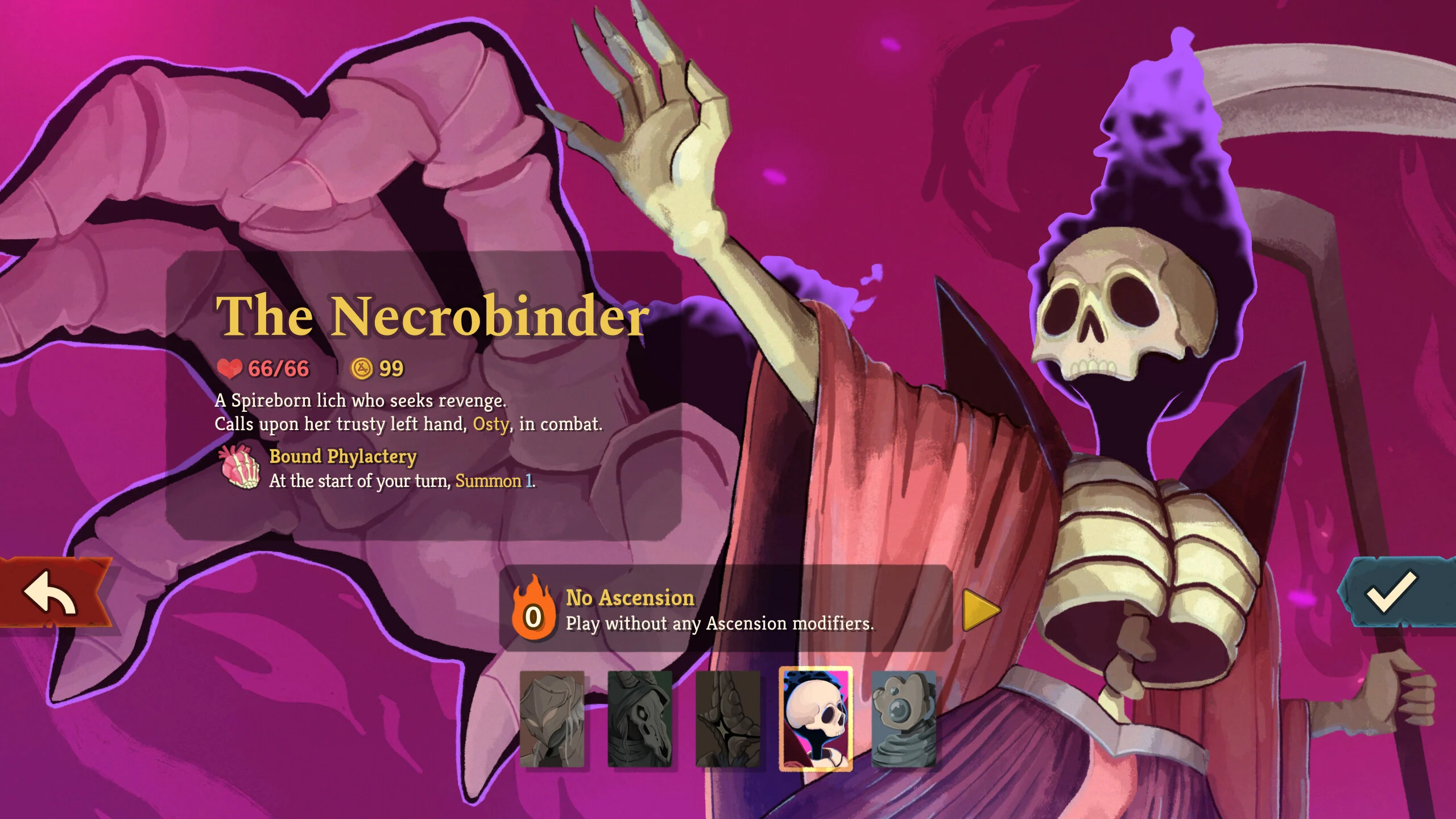
She starts with four Strikes, four Defends, Bodyguard, Unleash and Bound Phylactery, a relic that Summons 1 at the start of every turn. That relic is why Osty is never fully out of the fight, even in decks that ignore him. Even a pure Doom deck gets a small free meat shield.
Osty soaks the damage before it reaches you
Osty, her oversized bony left hand, takes damage for you once your Block runs out. Summon either raises his max HP or brings him back if he’s gone down, and unlike Block it doesn’t vanish when your turn ends. Bodyguard summons 5 (7 upgraded) for one energy.
The catch? Osty resets at the start of every combat, so you can’t carry a giant hand from an elite into the boss. Treat each fight as a fresh investment and decide early whether to grow him or just race. Against three small enemies, growing him pays off. Against a boss that front-loads damage, often it doesn’t.
Doom kills on the enemy’s turn, not yours
Doom is her signature debuff and it’s easy to misread. It doesn’t tick down and it doesn’t deal damage. At the end of the enemy’s turn, if a target has at least as much Doom as current HP, it simply dies. The key word is “end”: that enemy still gets one more swing at you before it drops.
Because Doom checks current HP, every bit of damage shortens the line an enemy has to cross. That’s the math behind the two best Doom cards, Reaper Form and Time’s Up. Reaper Form applies Doom equal to the damage your Attacks deal, so hitting an enemy for half its HP already dooms it. Time’s Up deals damage equal to the target’s Doom, so one copy seals it once Doom reaches half the enemy’s health.
Souls and Ethereal cards are the fuel
Souls are 0-cost cards that draw 2 and Exhaust. Capture Spirit shuffles 3 of them into your Draw Pile, and the Funerary Mask relic adds 3 at the start of every combat. Each Soul is a free card that replaces itself twice, so your deck gets thinner without removing anything. Add Haunt and every Soul you play also takes 6 HP from a random enemy.
Ethereal is the other fuel line. An Ethereal card gets Exhausted if it’s still in your hand when the turn ends, so you play it or lose it for the fight. The Necrobinder is the one character with real payoffs for that pressure, which is why Ethereal became a full archetype instead of a downside. Defy, her common Block card, is already Ethereal.
The three best Necrobinder builds, step by step
These are the three decks I’d commit to. Each has a clear win condition, a defensive plan and a short list of cards worth grabbing on sight. The rest is support you pick based on the map, as in the other roguelikes we cover.
Quick disclaimer: none of these are rigid lists. A Doom deck with three Souls in it is still a Doom deck, and Defy is good in all three. You need one way to win, one way to block and enough draw to see both.
The Doom build is the boss killer
Negative Pulse is the entry point: 1 energy for 5 Block and 7 Doom on ALL enemies. Deathbringer scales that up to 21 Doom and 1 Weak on every enemy for 2 energy. For single targets, Oblivion is the sneaky star, a 0-cost Skill that adds 3 Doom every time you play a card that turn, Souls included.
Reaper Form and Time’s Up are your finishers, while Shroud (3 Block every time you apply Doom on v0.111.0) keeps you alive while the clock runs. Time’s Up also lost its Exhaust keyword in the latest beta, so a single copy now works every time you draw it. Book Repair Knife, which heals 3 HP whenever Doom finishes an enemy, patches the build’s biggest weakness: the hits you eat while waiting.
The Osty build dominates Act 1 but needs a backup plan
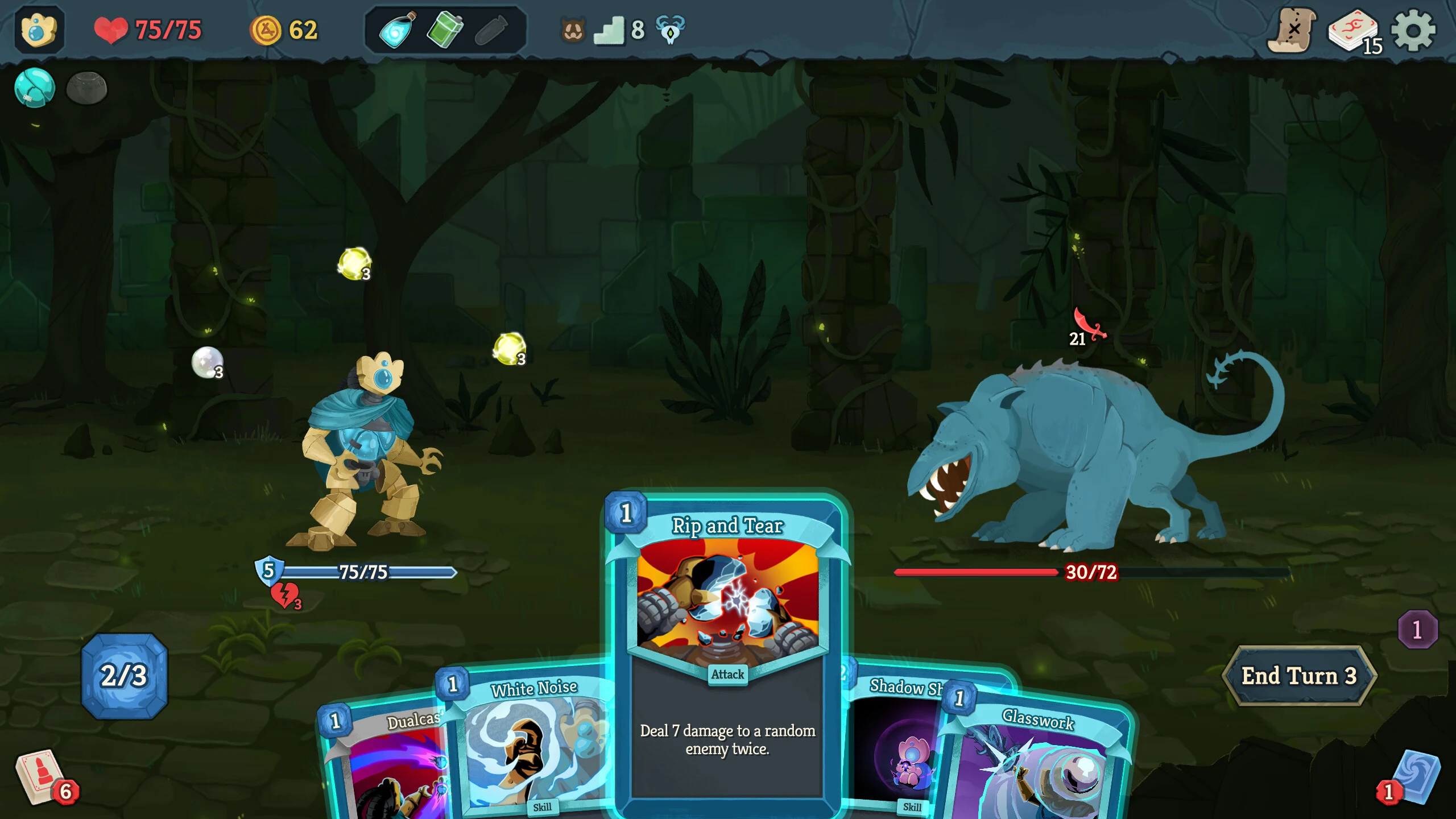
Fetch is a free Osty hit that draws a card, Flatten costs 0 once Osty has already attacked that turn, and Rattle (7 damage) hits one extra time for every other Osty attack before it. Order is everything: Fetch, then Flatten, then Rattle hitting three times for 21, all for a single energy. Bone Flute adds 2 Block every time Osty attacks, so that same sequence doubles as defense.
Squeeze (3 energy, Rare) is the payoff, adding 5 damage for each of your other Osty Attacks. Make Bodyguard your first upgrade, since a bigger Osty also means a bigger Unleash, which adds his current HP to its damage. Since Osty resets every fight, pair him with a couple of Doom cards for elites and bosses.
The Ethereal build is the most consistent climb right now
Spirit of Ash is the engine, a 1-cost Common Power that grants 4 Block every time you play an Ethereal card. Suddenly Defy isn’t 6 Block and 1 Weak anymore, it’s 10 Block and 1 Weak for the same single energy. Sculpting Strike adds Ethereal to a card in your hand, and Pagestorm draws a card whenever you draw an Ethereal one.
For damage, Pull from Below hits for 5 per Ethereal card played this combat, and Banshee’s Cry deals 33 to ALL enemies while costing 2 less for each Ethereal card you’ve played. By the middle of a long fight, that 9-cost Banshee’s Cry usually costs nothing, and the deck feels broken in the best way. Call of the Void, which adds a random Ethereal card to your hand each turn, keeps it fed.
Key cards for each Necrobinder build at a glance
Here’s the cheat sheet I’d keep open while drafting. The relic column is a “take it if you see it” list, not a requirement.
| Build | Core cards | Support picks | Relic to grab |
|---|---|---|---|
| Doom | Negative Pulse, Deathbringer, Oblivion, Time’s Up | Reaper Form, Shroud, Defy | Book Repair Knife |
| Osty | Bodyguard+, Fetch, Flatten, Rattle | Squeeze, Dirge, Unleash+ | Bone Flute |
| Ethereal | Spirit of Ash, Defy, Sculpting Strike, Pull from Below | Pagestorm, Banshee’s Cry, Call of the Void | None needed |
| Soul package (add-on) | Capture Spirit, Haunt | Seance, Dirge | Funerary Mask |
You’ll notice Souls sit there as an add-on rather than a fourth build. On their own they draw cards but don’t block or kill fast enough, so I treat them as a turbo you bolt onto Doom or Ethereal. Seance is the cleanest bridge, since it’s an Ethereal Skill that transforms a card in your Draw Pile into a Soul.
Adapting your Necrobinder for Ascension and co-op
The Ascension ladder in Slay the Spire 2 runs from A1 to A10, and every step makes her slow start a bit more dangerous. The builds don’t change at high Ascension, but how greedy you can afford to be absolutely does. Our Slay the Spire 2 Ascension guide breaks down what each level adds.
Co-op is the other side of the coin. With up to four players sharing the Spire, she stops being the one who has to do everything. She becomes the setup piece, and that’s where I think she shines brightest.
What to take in Act 1 so the run doesn’t stall
Act 1 is about surviving hallway groups while you figure out which build the run is offering. Negative Pulse and Defy are the two commons I take almost every time, because they’re useful in all three decks. Pulse handles groups, and Defy’s Weak takes the edge off big single hits.
Upgrade Bodyguard first if you lean Osty, and grab Capture Spirit when it appears, because three Souls smooth out clunky draws. What I skip early is any 3-cost payoff, since Reaper Form or Squeeze rotting in hand while you take a beating is how runs die. Wait for Act 2, when you have the Block to cast them safely.
Traps that quietly end Necrobinder runs at high Ascension
The classic one is forgetting that Doom resolves after the enemy acts. A boss with 40 HP and 40 Doom is still going to hit you this turn, so Block for it anyway. Also, Bone Shards and Sacrifice both burn through Osty: fine in Doom or Ethereal, terrible when you need him alive.
The one that caught me most often: making a card Ethereal with Sculpting Strike and then lacking the energy to play it. Ethereal is a free trigger only if you actually cast the card, otherwise you just Exhausted your best Skill. The higher I climb, the more I favor Spirit of Ash and Shroud over raw damage.
Playing the Necrobinder in co-op
Doom gets much better with friends. Since it checks against current HP, every point of damage your teammates deal drags an enemy closer to its Doom line. One Deathbringer plus an Ironclad or Defect doing their usual thing, and whole waves drop at the end of the enemy turn. The Weak it spreads protects everyone at the table, not just you.
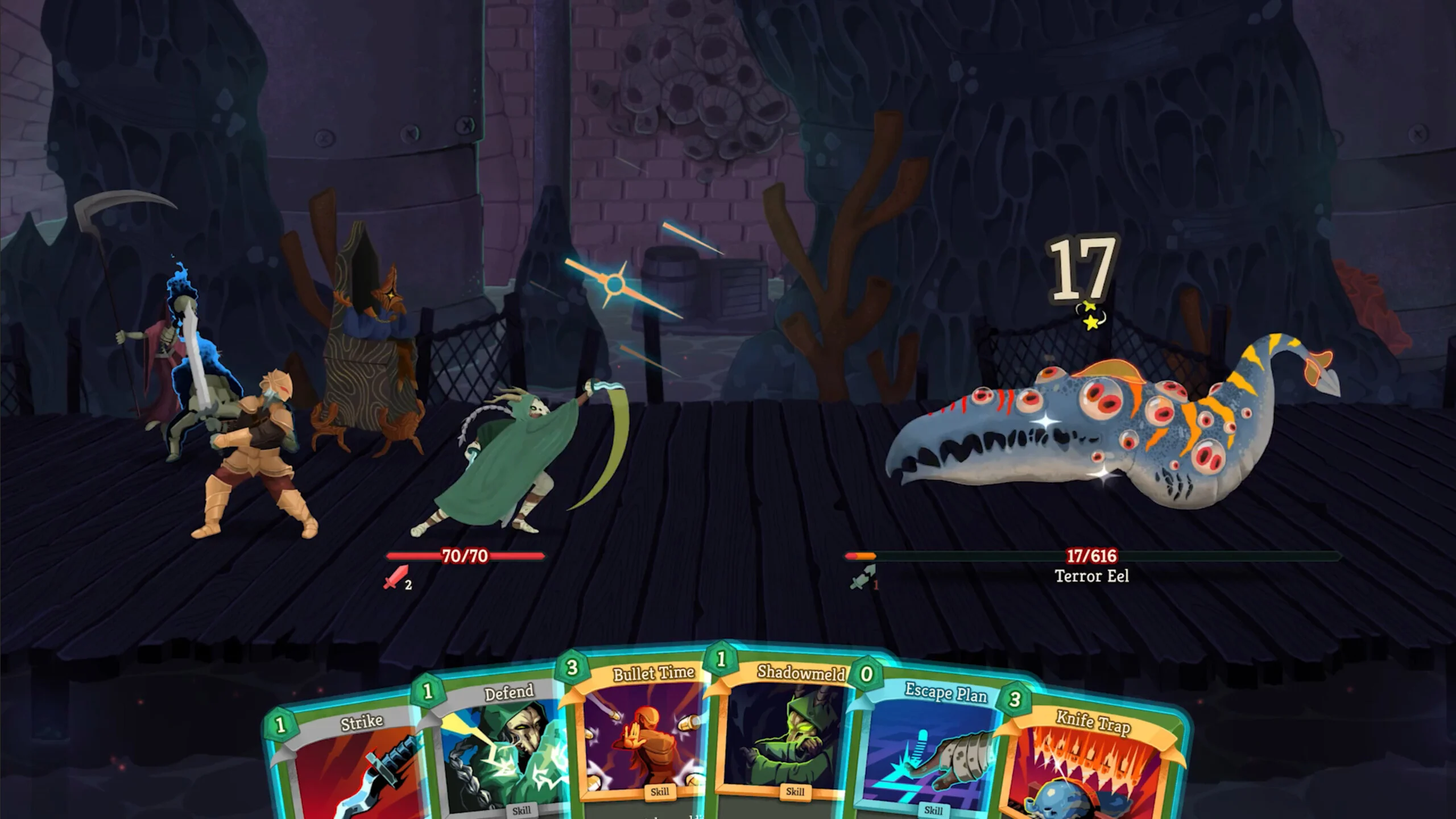
Glimpse Beyond is the co-op card to watch for, a Rare that puts 3 Souls in ALL players’ Draw Piles, so you’re handing out free draw to the whole party. When I queue with friends, I go Doom plus a small Soul package and let the heavy hitters hold the front line. For more team-up ideas, browse our co-op games coverage.
Personal review
She makes you do math, and the math feels great. Watching Reaper Form turn one big hit into a guaranteed kill, or casting a 9-cost Banshee’s Cry for zero, is the kind of payoff only Slay the Spire delivers. My go-to is Ethereal with a Deathbringer or two on top, because it blocks well and doesn’t fall apart when Osty resets. Love slow-burn engines? She’s your character. Prefer smashing face from turn one? Stay with the Ironclad.
Doom feels like the original poison Silent, except it never ticks, it just waits. For more engine-building, our Monster Train 2 Pyre Heart tier list is a great next stop. Slay the Spire 2 is in Early Access on Steam for Windows, macOS and Linux. Which build carried your best run, and what did I miss? Tell me in the comments.
Frequently asked questions
What is the best Necrobinder build in Slay the Spire 2?
For consistency, Ethereal built around Spirit of Ash, Defy and Banshee’s Cry is the strongest climb. Doom with Deathbringer, Oblivion and Time’s Up is the best pick for bosses and co-op.
How does Doom work in Slay the Spire 2?
Doom doesn’t tick or deal damage. At the end of the enemy’s turn, any enemy with at least as much Doom as current HP dies, so it still acts once more before dropping.
Does Osty keep his HP between fights?
No. Osty resets at the start of every combat. Bound Phylactery Summons 1 each turn, and cards like Bodyguard grow his max HP or bring him back during the fight.
What does Ethereal mean for the Necrobinder?
An Ethereal card is Exhausted if it’s still in your hand at the end of the turn. The Necrobinder turns that into value with Spirit of Ash, Pagestorm, Pull from Below and Banshee’s Cry.
Is the Necrobinder good for beginners?
She’s tougher than the Ironclad. She starts with 66 HP, the lowest of the five characters, and her builds need a few turns to set up, so she rewards players who already know the basics.
Where can you play Slay the Spire 2?
Slay the Spire 2 has been in Early Access on Steam since March 5, 2026, on Windows, macOS and Linux, with co-op for up to four players.