
 Marcos
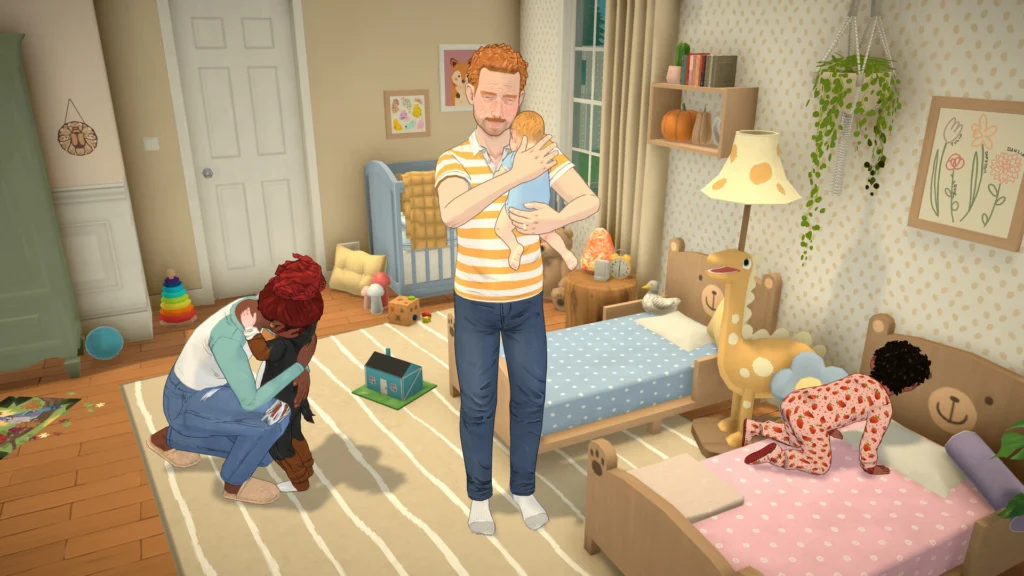
Want a Para baby? This Paralives baby guide starts with the short version. Both future parents have to be Young Adults or older, one needs the Can Get Pregnant setting and the other Can Make Others Pregnant, and they must share a hidden relationship label before Try for Baby even shows up. That last part trips up almost everyone (it tripped me up too). Paralives gates pregnancy behind relationship depth, not a single romance meter, and once that clicks, the whole family system makes sense. Everything below reflects version 0.1.9 of the Early Access build that’s on Steam right now, from the first pregnancy test to potty training.
How to try for a baby in Paralives
Coming from The Sims, I expected to flirt a bit, jump into bed and pick the baby option. Paralives makes you earn it. The Try for Baby interaction stays hidden until three things line up: life stage, fertility settings and one specific relationship label. Marriage is not one of those conditions, so dating couples and long-term Lovers can start a family whenever the game agrees they’re ready.
I actually like that it pushes you to build the relationship first, because the pregnancy ends up feeling like a story beat instead of a menu click. The catch? The game never tells you which piece is missing. So I’ll go through them in the order I check them in my own saves, the same hands-on approach we use in all our game guides. Most cases of Try for Baby not showing up come down to one of these three checks.
The Paramaker settings that decide who can get pregnant
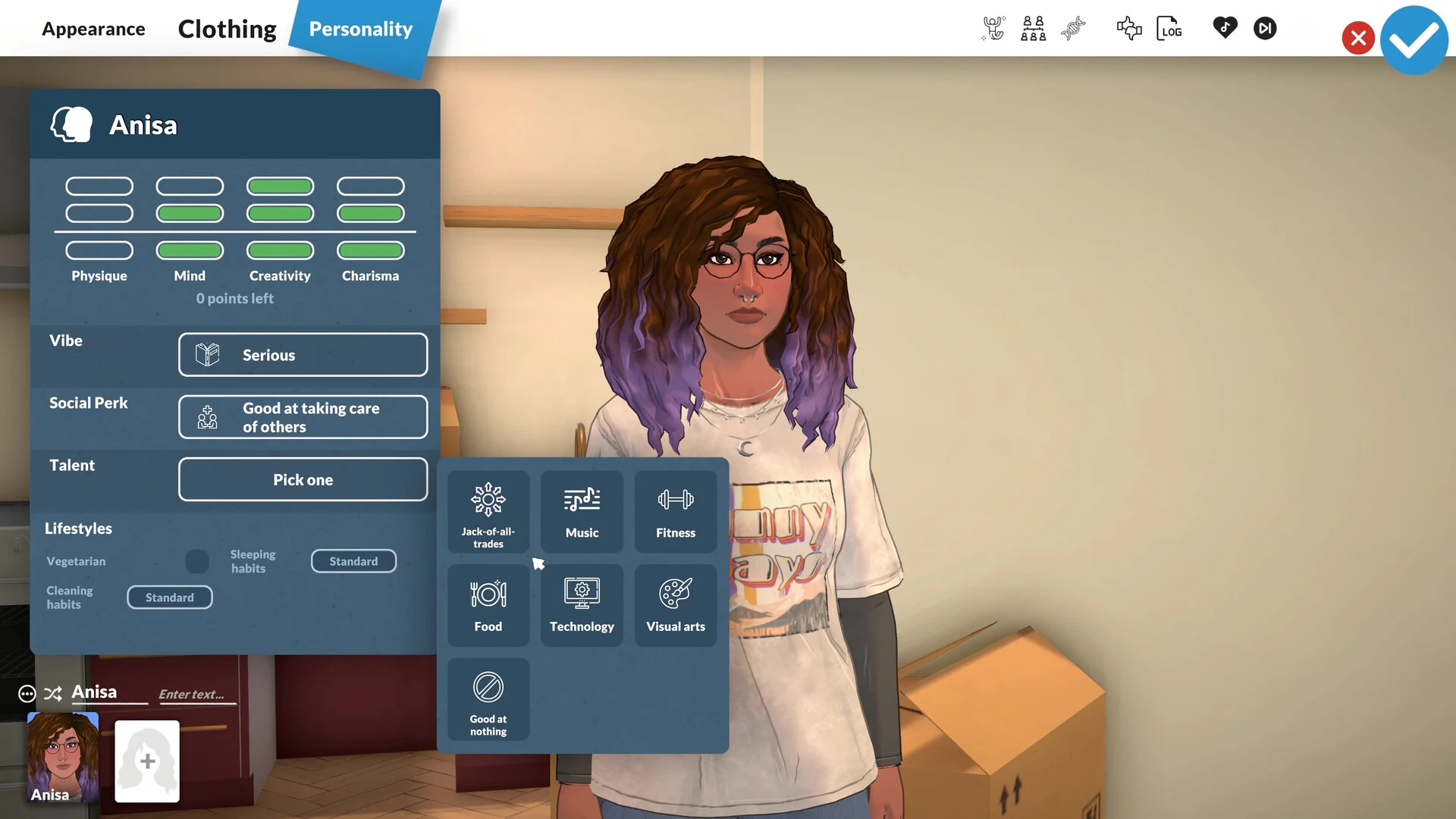
Fertility is decided at character creation. In the Paramaker, open the gender settings (the three dots menu) and look at the advanced options: one Para needs Can Get Pregnant and the partner needs Can Make Others Pregnant. Gender itself doesn’t matter, only those two toggles do, so you’re free to write whatever family you have in mind. Townies spawn with this already decided, which means the random NPC your Para fell for at the café might simply not be able to have a biological child with them.
Picked the wrong toggle in an ongoing save? No drama. The EDITCHARACTER cheat lets you change it mid-life. Check ages too: both Paras have to be Young Adults or older, so teens never see Try for Baby. And before you commit, take a look at your Storyteller, because its settings control the odds of conceiving, how long pregnancy and labor last and even the chances of twins or triplets.
Reaching the hidden Intimacy Partners level 2 label
This is the step nobody explains properly. Try for Baby requires the couple to share the hidden Level 2 Intimacy Partners label, and since it never appears in their profile, I spent a whole in-game evening convinced my couple was bugged. They weren’t. There are two ways to unlock that label, and one is a lot quicker than the other.
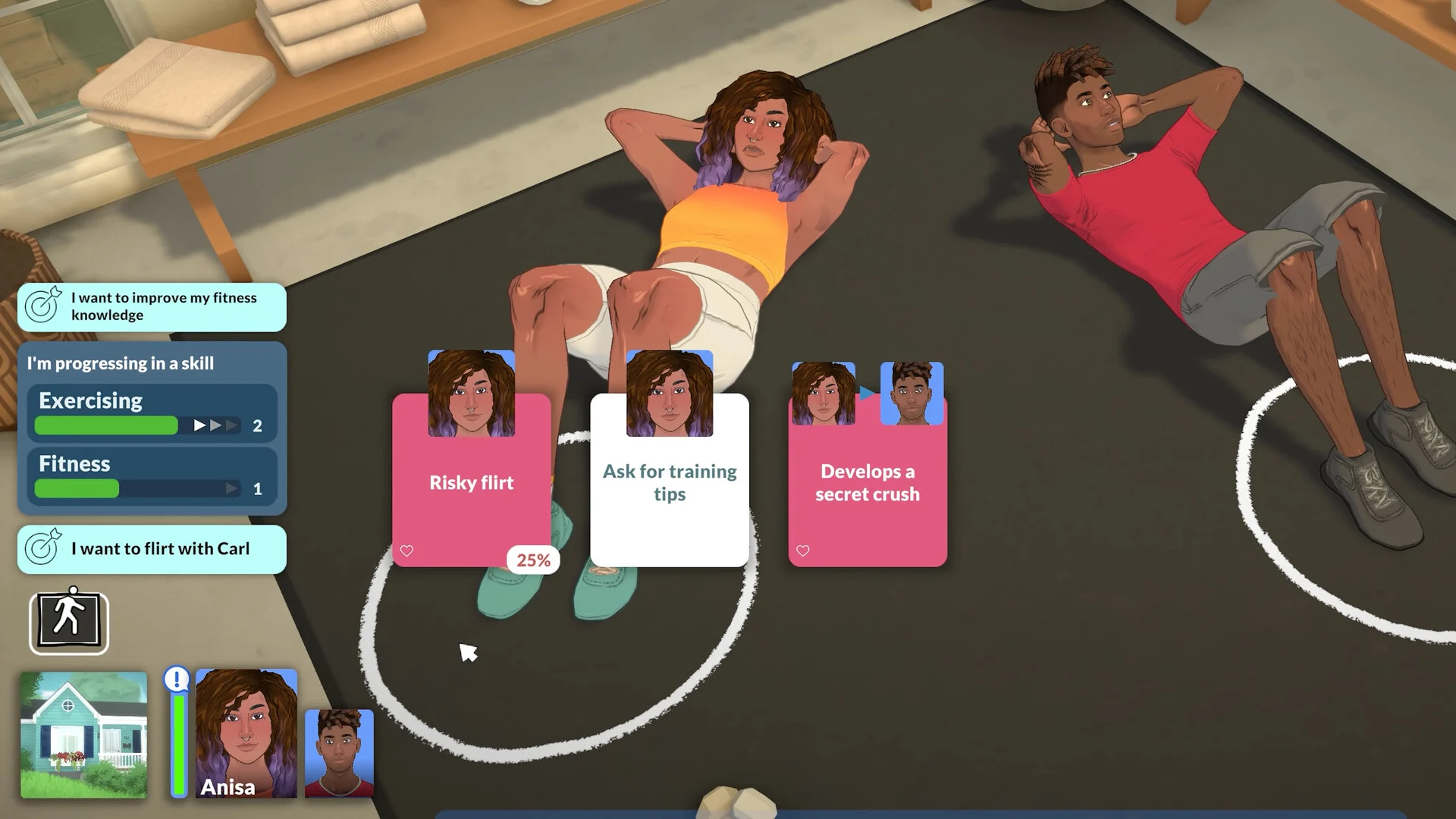
The slow route is getting intimate again and again, which opens up once the pair reaches an advanced level of Romantic Interest. The fast one is the Together Card ‘Ask if they want to have children together in the future’, available once they’re Lovers. That card also grants the Future Co-Parents label, and it’s my favorite shortcut in the entire family system. What I do now is push the romance until the Lovers label appears, then play that card the moment it lands in my hand.
Using the bed, the partner or a Want to start Try for Baby
With everything in place, click the bed or the current partner and Try for Baby shows up in the list. Starting intimacy straight from the bed or the partner arrived in version 0.1.7, and honestly it cut out a lot of awkward clicking. If you’d rather let the story lead, keep an eye out for the ‘Try to have a baby with [name]’ Want or the Let’s Have a Baby Life Goal.
With either one active and the pair at Lovers, the Together Card ‘Ask if they want to try for a baby NOW’ appears, and the Paras head off and do it on their own. Still nothing? My checklist: both Young Adults or older, the two fertility toggles right, Lovers and not just dating, and the future children card played. Workshop mods can interfere with relationship labels too, so if you run a lot of them, test the couple in a clean save first.
Paralives pregnancy explained, from test to birth
A successful Try for Baby doesn’t announce itself. No instant notification, no sparkles, and that little bit of suspense is one of my favorite touches in the game. On default Storyteller settings, a full pregnancy takes around 65 in-game hours: three trimesters of 21 hours each, plus two hours of labor.
That fits inside a single in-game week, so if your Para works, plan a lighter schedule around the third trimester. Keep in mind these are defaults; the Storyteller can stretch or shrink every stage, which is also why two players on the same PC build can report different timings. Check your own Storyteller before you compare notes with anyone.
Taking a pregnancy test on the toilet
Click any toilet in the house and choose the pregnancy test. A negative result shows a small notification saying the Para isn’t pregnant, while a positive one pops up in the middle of the screen telling you to prepare the baby’s room. Testing right after Try for Baby is the quickest way to know if you should try again that night.
Skip the test and the game tells you anyway at the start of the second trimester. Before that, the expecting Para wakes up Feeling Dizzy instead of with Morning Sickness, a sneaky hint if you’re paying attention. I always test, because knowing early is what activates the Happy boost of the first trimester.
How long each trimester lasts and what changes
Each stage shows up as a status effect on your Para. The +2 Happy in the first trimester only kicks in if the Para already knows, which is one more reason to test. This is what I keep an eye on:
| Stage | Duration | What happens |
|---|---|---|
| Pregnant (1st trimester) | 21 hours | +2 Happy if known, +2 Uncomfortable after waking up |
| Pregnant (2nd trimester) | 21 hours | +2 Happy, pregnancy revealed automatically |
| Pregnant (3rd trimester) | 21 hours | +2 Happy, new walk and idle animation, ends in labor |
| In Labor | 2 hours | Negative emotion, unlocks the AAAAAAHHHH! Together Card |
The belly grows with each trimester, and in the third your Para walks and idles differently. Every outfit works with the bump, so there’s no maternity wardrobe to build. Pregnant Paras also get their own conversation topics, like wondering about the baby’s sex or talking about morning sickness, which adds flavor to otherwise routine chats.
Labor, birth and naming your newborn
When the third trimester runs out, a notification tells you your Para is going into labor, and the next two hours are all contractions. Yes, there’s a Together Card literally called AAAAAAHHHH! during labor, and yes, I play it every single time. Once the two hours are up, the baby arrives and the game congratulates you.
The baby’s profile then slides in on the right side of the screen, where you can change the first name and pick either parent’s surname or type a custom one. Since 0.1.7 the newborn lands in the parent’s arms instead of on the pavement. With twins or triplets, only one baby goes into the arms and the rest end up on the floor, so have cribs ready. Baby faces also take after both parents now, and slider tweaks made on a baby in the Paramaker carry into later life stages.
Adopting and raising a baby into a toddler in Paralives
Not every Para can or wants to get pregnant, and adoption covers that in a couple of clicks. Then the real job begins. Like in most cozy life sims, the little ones are pure dependency: babies and toddlers rely on older Paras for every single need, so the household you build matters more than how the kid arrived.
There’s a safety net, though. Unattended babies and toddlers are sent to daycare automatically and come back as soon as a Teenager or older from the household is home. You can’t really lose a baby to neglect while everyone’s at work, and that takes a lot of pressure off the first days.
How to adopt a baby at a Melino health center
Health centers are spread around Melino and marked with their own symbol on the town map. Some look like hospitals, others like small clinics or pharmacies, but they all work the same way. Any Young Adult or older Para can click one and choose Adopt a baby, no partner or fertility setting needed.
Your Para goes inside for a few in-game hours and walks out holding a baby generated by the game. You name them in the same side pop-up used after a birth, and the surname can match the adoptive parent or be custom. Adoption is tied to the Para who goes in, so if you’re playing a couple, send the partner you want listed as the parent. You’ll be back at these buildings later anyway, since they also cure the viruses kids catch at school.
Baby care: needs, cribs and when they grow up
Babies are born with zero personality. They don’t inherit traits from their parents; everything develops later. Their need bars only have 6 cartridges, so they get cranky fast, and they come with an Affection need that only attention from older Paras can fill. Food, sleep, diapers and cuddles all go through you.
Put them in a crib or carry them around; they can also crawl on all fours and do a few things alone, like sleeping, shaking their rattle or crying. Keep an eye on diapers, because adults don’t always handle them on their own. The Baby stage lasts 3 in-game days by default and Language is the only skill available, raised by being in a group with older Paras using Together Cards. Aging happens automatically, and you can switch it off in the Storyteller, separately for your active household and for townies.
Toddler care: high chair, potty training and first words
When the baby ages up, you choose their first Stat point, the only personality trait they’ll have until the next stage. Toddlers stand and walk, play with toys and can hug or chat with family. Their need bars have 8 cartridges instead of 6, so they’re a bit more forgiving, and the stage lasts 4 in-game days.
To feed one, buy a high chair, pick the toddler up and choose Feed in high chair, then take them out when they’re done. A toddler potty from the children’s section of Build Mode levels up the Potty skill, while Language keeps growing through group chats. Buy the potty and the high chair before the age-up, trust me, scrolling Build Mode with a crying toddler is no fun. After those 4 days they become Children, unlock their Talent and, since 0.1.9, can join extracurricular classes and get homework more often to raise their grades.
Common baby bugs and how to fix them in version 0.1.9
Early Access means quirks, and babies had plenty. Version 0.1.9 fixed babies born in another household being added to your active family, Paras getting locked in place after interacting with a baby in a crib, and the Change Outfit interaction failing on babies and toddlers. If your Para froze next to a crib in an older save, updating should sort it out. The Get Intimate For The First Time Together Card also shows up properly now, which helps couples reach that hidden label.
Some issues are still around. Babies teleporting into the ocean remains on the developers’ known issues list, which is exactly as chaotic as it sounds. My rule is to save manually right before a birth or an adoption, so a bug never costs me the whole family. And if a parent keeps leaving the baby on the floor, queue an action that needs free hands; since 0.1.7, Paras prioritize putting babies in cribs.
Personal review
What surprised me most is how Paralives treats having a child as a relationship milestone rather than a button. The hidden Intimacy Partners label annoyed me at first, but the children together in the future card made it feel earned, and the Feeling Dizzy hint before the test is the kind of subtle detail I love. Compared with The Sims 4, the baby and toddler stages here are shorter and lighter on activities, although the daycare safety net makes them far less punishing. Legacy players will enjoy it most, especially now that the average lifespan went from 98 to 112 days.
If you want deep toddler gameplay, it’s still thin, and the first Major Update (pushed past the end of 2026) focuses on relationships, interactions and the economy rather than kids. Paralives is in Early Access on Steam for PC and Mac at $39.99. When diapers get too much, I unwind with something brutal like our Slay the Spire 2 Ascension guide or the Monster Train 2 Pyre Heart tier list. Tell me in the comments how your first Para baby went, what you’d recommend to new parents and what you think the game is still missing for families.
Frequently asked questions
Do Paras need to be married to try for a baby in Paralives?
No. They need to be Young Adults or older, have the Can Get Pregnant and Can Make Others Pregnant settings between them and share the hidden Level 2 Intimacy Partners label. Dating couples and Lovers both qualify.
Why is Try for Baby not showing up in Paralives?
Usually one Para lacks the right fertility setting, one of them is a teen, or the couple has not reached the Level 2 Intimacy Partners label. As Lovers, play the Together Card about having children together in the future to unlock it quickly.
How long is a pregnancy in Paralives?
On default Storyteller settings there are three trimesters of 21 in-game hours each plus 2 hours of labor, around 65 hours in total. Your Storyteller can change these durations.
Can a single Para adopt a baby in Paralives?
Yes. Any Young Adult or older Para can click a health center in Melino and choose Adopt a baby. They come back out a few in-game hours later holding the baby.
How long do babies and toddlers last in Paralives?
By default the Baby stage lasts 3 in-game days and the Toddler stage lasts 4. You can turn aging off in the Storyteller settings if you want to keep them small longer.
Can you have twins or triplets in Paralives?
Yes. The odds depend on your Storyteller settings. One newborn appears in the parent’s arms and the others on the floor, so keep enough cribs ready.